Published July 1, 2026
What Counts as Homeschool Evidence? A Simple Guide for Parents
7 minute read
In this article
Many homeschool parents eventually wonder: “What counts as homeschool evidence?”
Learning does not always look like traditional schoolwork. A child may learn through worksheets, books, projects, cooking, nature walks, field trips, conversations, chores, games, or real-life problem solving. The tricky part is deciding what is worth saving without trying to keep every single thing.
Why homeschool parents feel overwhelmed
It is easy for homeschool records to spread everywhere. Phone photos pile up by the thousands. Worksheets land in stacks, folders, binders, boxes, or backpacks. Notes may be in a planner, a notebook, a spreadsheet, or simply in your memory.
Months later, a parent may look back and wonder what actually matters. Was the nature walk enough? Should every math page be saved? Does a cooking project count? That uncertainty can make record keeping feel heavier than the learning itself.
What counts as homeschool evidence?
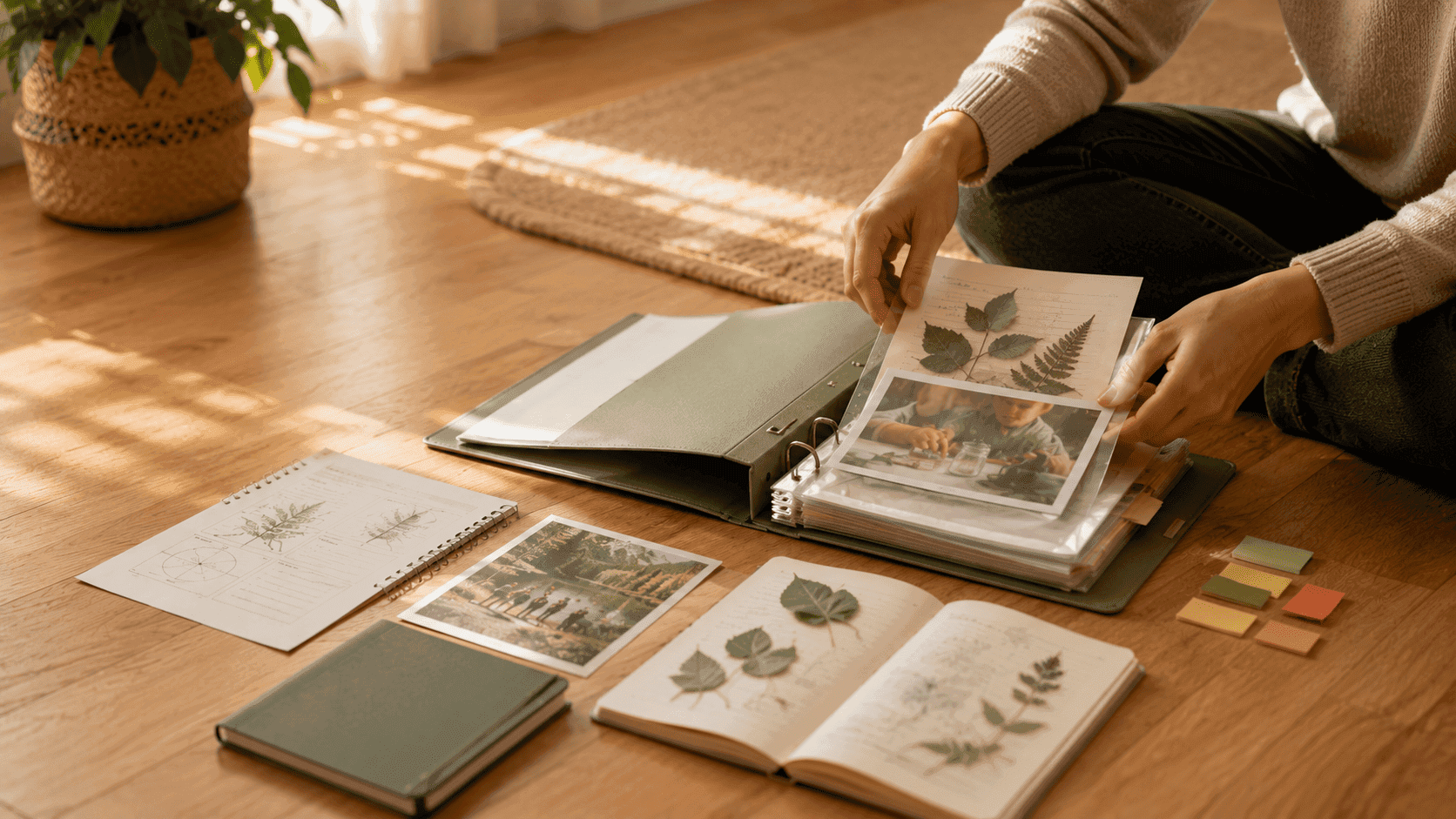
Homeschool evidence is anything that helps you remember what your child did, what they practiced, and how they grew. It does not have to be fancy. It just needs to be meaningful enough to tell part of the learning story.
Worksheets
Worksheets count because they show written practice, completed lessons, and examples of what your child worked on. A math page, handwriting sample, spelling list, or science worksheet can be useful when it shows a skill, effort, or progress. You usually do not need every page — choose clear examples across the year.
Reading
Reading evidence can be a book list, reading journal, narration, discussion note, or photo of a book your child finished. It is worth keeping when it helps you remember what was read, what your child understood, or how reading habits changed over time.
Hands-on projects
Projects count because learning often happens through building, testing, making, cooking, observing, or experimenting. A photo of a model, art project, garden study, recipe, or science setup can become a useful record when you add a short note about what your child practiced.
Field trips
Field trips can show learning through museums, nature centers, farms, libraries, historical sites, performances, and community experiences. Keep a photo, date, location, and one sentence about what your child noticed or learned.
Life skills
Life skills count when your child is practicing real abilities such as cooking, budgeting, measuring, planning, caring for animals, organizing, or solving everyday problems. These records are especially helpful because they may not create a worksheet.
Photos
Photos are useful when they preserve a moment that would be hard to explain later. A photo works best with a short note, subject, date, and skill practiced so it does not become just another image lost in your camera roll.
Parent observations
A parent note can count as evidence when it captures something meaningful: a conversation, question, breakthrough, struggle, new habit, or skill you saw in real time. Keep it short and specific so it is easy to understand later.
Progress samples
Progress samples show growth over time. You might save a writing sample from September and another from May, early math work next to later work, or before-and-after project photos. These are often more useful than saving a large pile of similar pages.
If your homeschool includes a lot of projects and real-life learning, this guide on how to document hands-on homeschool learning may help you turn those moments into clearer records.
How much evidence should you actually keep?
You do not need to save everything. In fact, saving everything can make your records harder to use later. A huge pile of random papers and photos may feel safe, but it can be difficult to review when you need a clear picture of the year.
A better goal is to keep enough meaningful examples to tell your child’s learning story. Choose samples across subjects, include both written and hands-on learning, and add just enough context that you can understand the record months later.
For a deeper look at this, read How Much Homeschool Evidence Is Enough?
A simple homeschool evidence checklist
If you want a simple starting point, try saving a few meaningful examples from these areas:
- Reading
- Writing
- Hands-on learning
- Projects
- Photos
- Field trips
- Parent notes
- Progress samples
Your system can be a binder, spreadsheet, Google Drive folder, app, or a mix of tools. This comparison of homeschool record keeping with a binder, spreadsheet, Google Drive, or app can help you choose what fits your family.
You can also view a sample portfolio page to see how a few ordinary records can become a clearer portfolio-style summary. Florida families may also find the Florida homeschool portfolio page helpful.
Final thoughts
Homeschool evidence does not need to be perfect. It only needs to help you remember the learning that happened and choose enough meaningful examples to show growth over time.
Consistency matters more than perfection. A few clear records, saved along the way, can be much more useful than trying to reconstruct the year from memory later.
Related articles
Want to see what organized homeschool records could look like?
Homeschool Keeper helps turn photos, worksheets, field trips, reading notes, and hands-on learning into simple portfolio-style records — without trying to document every single moment.
Your child’s photos and records stay private to your account. We don’t sell your data and never share it — you choose what’s included.